
by James Tate
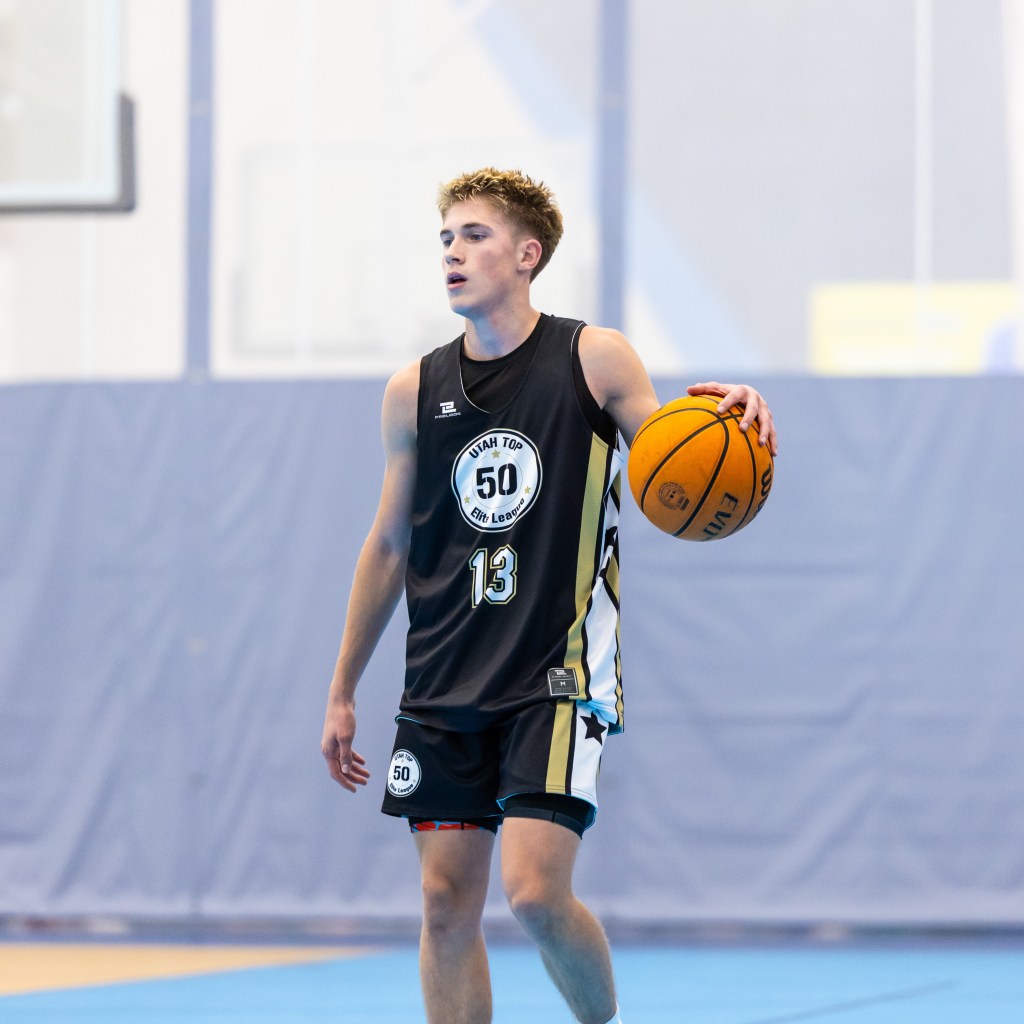
On a quiet morning inside a gym far from home, senior guard Beau Hansen moves through his shooting routine with the same intensity he once brought to a movie theater aisle as a five‑year‑old. He was the kid who couldn’t sit still, the kid who dribbled through the previews because he already felt the urgency to get better. When his mom whispered for him to stop, he answered with a seriousness far beyond his age:
“Practicing, Mom, Hansen said. “I have to get better.”
That instinct, that need, has shaped every step of his basketball life. Beau has always been the undersized kid, the overlooked kid, the one who had to outwork everyone to stay in the room. His journey has never been smooth or linear. It has been a climb: early setbacks, unexpected breakthroughs, long mornings, late nights, and the stubborn belief that effort could close any gap.
On a grueling mountain hike as a twelve‑year‑old, carrying a pack nearly two‑thirds his body weight, Beau hit a breaking point. His dad didn’t let him off the hook.
“No one is going to carry your pack for you in anything in life,” his dad said. “If you want it, work harder.” Beau kept climbing.
He’s been climbing ever since, through the doubts, through the cuts, through the years when his size said no but his work said yes. From small‑town gyms to AAU circuits, from early mornings at Roy High to the national prep‑school stage, Beau Hansen has built a career on the long road.
Where that road leads next is still unfolding. But one thing has never changed: prediction has never mattered much to Beau Hansen; work has.
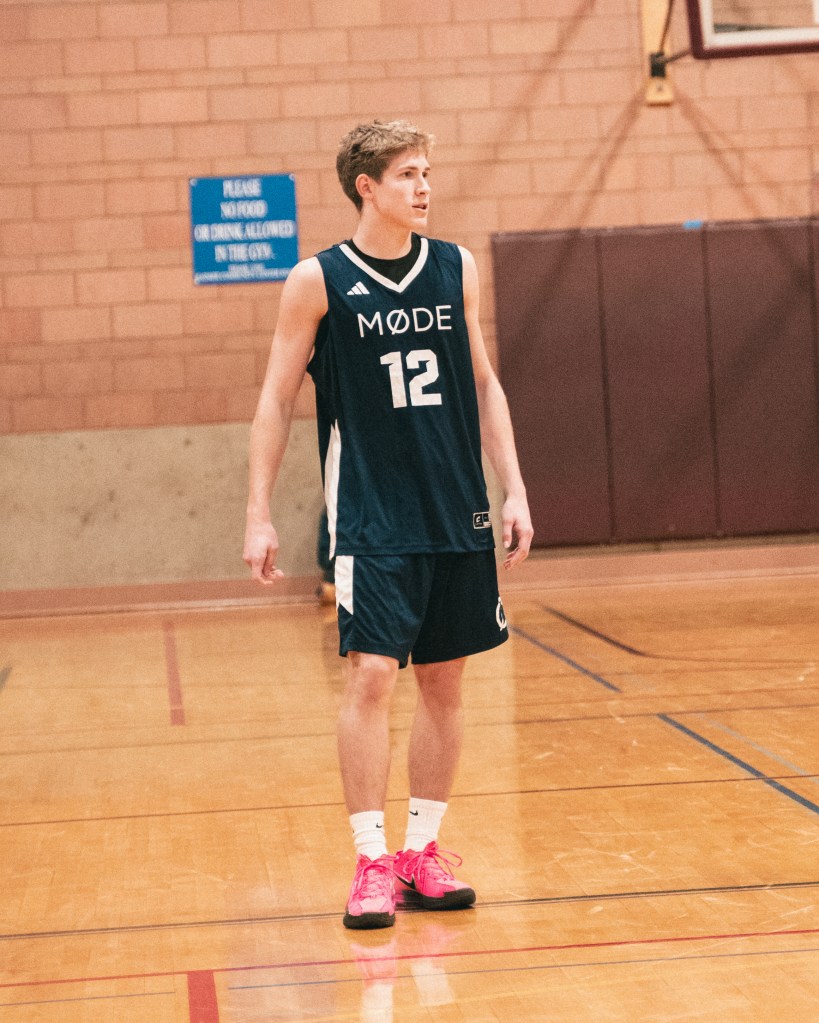
Roy High, where the work first spoke loud enough
Before Beau Hansen ever stepped onto a national stage, before prep schools and cross‑country flights, there was a small‑town gym in Roy, where he first learned what it meant to prove himself. He arrived as a freshman with a frame that made coaches raise eyebrows and opponents smirk.
Five‑foot‑six, one hundred eight pounds, a kid who looked more like a manager than a varsity guard. But Beau didn’t walk into Roy High expecting anyone to believe in him. He walked in ready to outwork whoever did.
Those early practices were the first real test of the philosophy his dad had drilled into him on that mountain trail. No one was going to carry his pack, not here, not anywhere. So Beau carried it himself, through conditioning drills, through contact that knocked him off balance, through scrimmages where older players tried to bury him under their size. He kept getting up. He kept coming back. And slowly, the gym began to notice.
He wasn’t the loudest player, but he was the one who arrived before the lights fully warmed and stayed after the echoes died. He chased seniors in transition drills, absorbed every defensive assignment without complaint, and treated every possession like a chance to prove he belonged.
Coaches started to see what his family had always known: Beau didn’t just work hard. He worked with purpose, urgency, and the quiet conviction that effort could close any gap.
By midseason, he wasn’t just the small freshman on the roster; he was the freshman who refused to disappear. He carved out minutes not because he was the biggest or the strongest, but because he was the one who made the game easier for everyone else. He defended with an edge, pushed tempo with confidence, and played with a maturity that didn’t match his age or his size.
And even then, even as a skinny freshman fighting for minutes, Beau sensed that staying comfortable would eventually cap his growth. Years later, Hansen reflected on the decisions to leave Roy High for Utah Prep and later to move again to MODE Prep.
“For me, it came down to believing in myself and trusting that stepping out of my comfort zone would help me grow, Hansen said. ” I knew those environments would challenge me more and put me around higher‑level competition, which is what I needed to reach my goals.”
That mindset didn’t start when he transferred. It started here, in this gym, in this chapter, when he first realized that chasing his ceiling might one day mean leaving the place that helped him find his footing.
Roy High didn’t make Beau Hansen. But it revealed him. It was the first place where the work finally spoke loudly enough for others to hear.
And it was only the beginning.

The cut that changed everything
Before Hansen ever stepped onto a national stage, before prep academies and Adidas circuits and cross‑country flights, there was an eighth‑grade gym where a coach told him he wasn’t big enough, strong enough, or promising enough to make the team. It was the kind of moment that crushes most kids.
For Hansen, it cracked something open. He remembers the sting first, the embarrassment, the doubt, the quiet ride home where he wondered if basketball was really meant for him. But somewhere in that disappointment, something shifted. The doubt didn’t last long. It hardened into resolve.
“That moment changed me the most,” Hansen said. “I took it personally, in a positive way. I became determined to prove that size doesn’t define your ability or your future in the game.”
From that day forward, everything about his training changed. He worked with more purpose, more intention, more edge. He wasn’t just trying to get better; he was trying to rewrite the story someone else had written for him.
The chip on his shoulder didn’t weigh him down; it fueled him. It made him resilient and relentless. And it became the foundation of the player he is today.
Utah Prep Academy, the offer
When Beau’s junior season ended, his phone didn’t stay quiet for long. AAU programs from every corner of Utah were calling, each wanting him on their summer roster. It was clear from this point: he wasn’t just a hard‑working kid anymore; he was a player people wanted.
One of those calls came from Southern Utah, from the Utah Prep Basketball Academy. The head coach at the time was Keith Smart, former NBA head coach and USA Olympic coach, and the man who had coached college basketball star and Brigham University player AJ Dybantsa. He had watched Beau’s film and wanted to see him in person.
At the same time, Beau had plans to run with some familiar AAU teammates over the break. But the Utah Prep invitation was different, and it carried weight.
So over spring break 2025, the Hansen family made the trip.
The moment they arrived, the staff put Beau through a grueling two‑hour workout to test him in everything: conditioning, toughness, fundamentals, and how he responded when he got tired. When it was over, they didn’t shake hands and send him home. They asked if he could come back for Day 2.
The one‑day visit suddenly became two, and after Day 2, they asked if he could return for Day 3. Beau didn’t hesitate. He showed up.
That final workout was with Coach Smart himself, and halfway through, Smart suddenly stopped the session. Jason and Beau both braced for the worst, a polite dismissal, a “thanks for coming,” something along those lines.
Instead, Smart looked at him and said, “I can’t do this anymore, Beau. You work harder than half of my National Team players. Your fundamentals are so sound, and you remind me of my favorite player, John Stockton. Welcome to Utah Prep.”
The gym went silent.
Beau, still catching his breath, managed only: “Can I think about it, coach?”
The offer was for Utah Prep’s Elite and Prime teams, not the National Team, but it’s close. Smart told him plainly: he wasn’t a national‑level player yet, but he would practice with them, and he was absolutely good enough to play college basketball if he was willing to grind.
Beau left the Academy with a decision to make. Beau talked to friends, family, coaches, teammates, and anyone whose voice mattered to him.
On April 13, 2025, he made the call.
He would leave Roy High, his senior year, and the comfort of home to join the Utah Prep Basketball Academy.
The reaction was mixed; some were thrilled for him, some were upset. Others questioned whether a kid who had barely played varsity could really belong on a roster like that.
But Beau had already decided. He knew what he wanted. And he knew the summer ahead would be the hardest of his life, because now he had to prepare to play with, and against, the best high school players in the country.
Learning to compete at the highest level
If the cut in eighth grade built Hansen’s edge, the national circuits sharpened it. Playing on the Adidas 3 SSB circuit and competing on the National Grind Session introduced him to a different world, one where every player is bigger, stronger, faster, and smarter. Nothing comes easy, and nothing is given.
“The level of play is completely different,” Beau said. “You have to elevate every part of your game. Small mistakes get exposed right away.”
Those environments forced him to think more quickly, play more physically, and value every detail. They also broadened his basketball mind. Playing with athletes from around the world showed him new styles, new rhythms, and new ways to see the floor. His understanding of spacing, pace, and decision‑making expanded. His confidence grew with it.
More than anything, those stages showed him he belonged, not because of his size, but because of his work. And as he closes out his senior season, Beau hopes college coaches see the full picture.
“I’m more than just a player,” Hansen said. “I’m disciplined, coachable, and committed to getting better every day. I take pride in how I carry myself on and off the court. My faith keeps me grounded and gives me purpose. Wherever I go, they’re getting someone who is going to represent their program the right way and give 100% every single day.”
The kid who once stood 5‑foot‑6 and 108 pounds isn’t asking anyone to believe in him. He’s already done the work. He’s already carried the pack.
Updates on Beau
Rankings: Beau is currently ranked as the #12 point guard in Utah and #21 in Washington by Prep Hoops.
Recruiting: Beau is in communication with multiple schools and recently received offers from Clackamas Community College (OR), Colorado Northwestern Community College, and Northwest Nazarene University (ID).
Teams: Beau has played for Roy High, Utah Prep Academy, and MODE Prep Academy, as well as the Utah Valley Prime club team on the Adidas 3SSB Gold Circuit.
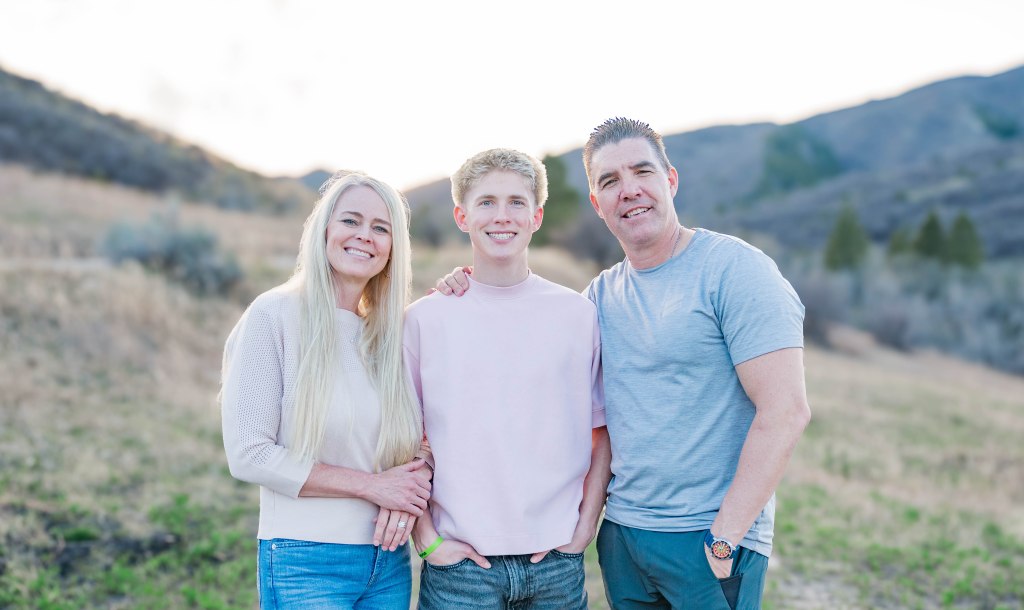
photos courtesy of the Hansen family


 The Hive Sports
Leave a Reply